Wednesday, April 1, 2009

"Single-Handed Sailor" - Dire Straits, 1979 (blues rock)


Two in the morning dry-dock town
The river rolls in the night
Little gipsy moth she's all tied down
She quiver in the wind and the light

Yeah and a sailing ship is just held down in chains
From the lazy days of sail
She's just a lying there in silent pain
He lean on the tourist rail

A mother and her baby and the college of war
In the concrete graves
You never wanna fight against the river law
Nobody rules the waves
Yeah and on a night when the lazy wind is a-wailing
Around the Cutty Sark
The single handed sailor goes sailing
Sailing away in the dark

He's upon the bridge on the self same night
The mariner of dry dock land
Two in the morning but there's one green light
And a man on a barge of sand

She's gonna slip away below him
Away from the things he's done
But he just shouts 'hey man what you call this thing'
He could have said 'Pride of London'
On a night when the lazy wind is a-wailing
Around the Cutty Sark
Yeah the single handed sailor goes sailing
Sailing away in the dark

"Single Handed Sailor" was released on the Dire Straits CD "Communique" in 1979. In Germany, New Zealand, and Sweden the album went strait to the top of the charts. Lord only knows why this ketch-y little tune didn't get much airplay here in the US. Mark Knopfler wrote this song as a tribute to Sir Francis Chichester, a sailor who was the first (and fastest) person to truly nautically circumnavigate the globe with no crew but himself.


In 1966, Chichester set out from Plymouth, England along the clipper route. The clipper route is the traditional route sailed by clipper ships between Europe, the Far East, and Australia. The route runs through the Southern Ocean in order to make use of the wind system known as The Roaring Forties, located between 40 and 50 degrees latitude. These winds were enough to create rough conditions and sink ships, but they also quickly propelled the clipper ships around the great capes: The Cape of Good Hope (southern tip of Africa), Cape Leeuwin (the southwestern tip of Australia), and Cape Horn (southern tip of S. America). These danger zones became significant landmarks in ocean voyaging. In 1869 and 1914, the Suez and Panama Canals (respectively) made it possible for ships to avoid such southerly travel, which not only saved many lives but also time and money in the delivery of goods; the ships could now sail straight across the globe instead of going all the way around the continents. True global circumnavigation, however, means the sailing vessel rounds all three of these highly dangerous cape areas. Even today, 'round-the-world sailing races incorporate the use of these landmarks, and ironically, despite the installation of the canals, the clipper route is still the fastest way around the world.


A clipper ship is a particular type of commercial ocean-going vessel that is very has multiple masts (means it has lots of sails) and square rigging. The hull of a clipper ship was also quite narrow, but the shape of the rigging and the narrowness of the hull is what earned these ships their name. "Clip" was the English slang term for "to fly or move very quickly". These ships may have been limited in their freight capacity, but they made up for this shortcoming in speed. Chichester's Gipsy Moth IV is only a ketch - a sailing craft with only two masts. This means that while the ship itself is smaller and more easily tossed, it also does not have as many or as large of sails to fill with wind. A yacht's top speed is directly related to it's wetted length. The Gipsy Moth IV was only 53 feet, whereas the clipper ships averaged wetted lengths in the couple-hundred-feet range. The little 53' ketch had a maximum hull speed of only 10 knots, while standard clipper ships averaged lengths of over 100, which meant being capable of more than double the hull speed. So, not only was the little Gipsy Moth IV out sized, out weighed, and out manned, she was also pretty slow as far as clipper ships were concerned (at the time).

Chichester recorded in his log that at Cape Horn, he was rolled in a 140 degree capsize. Good thing his craft was designed to self right. And then he recorded:

"The waves were tremendous. They varied each time, but all were like great sloping walls towering behind you. The kind I liked least was like a great bank of gray-green earth 50' (15 m) high and very steep. Image yourself at the bottom of one. My cockpit was filled five times and once it took more than 15 minutes to drain. My wind-reading machine stopped recording at 60 knots. My self-steering could not cope with the buffeting....I had a feeling of helplessness."

Gipsy Moth IV

Nautical scholars, explorers, and sailors agree that Gipsy Moth IV has to have been the worst racing vessel ever built. Nonetheless it earned Chichester his knighthood and earned the following bragging rights:

-Fastest voyage around the world by any small vessel
-Longest non stop passage that had been made by a small sailing vessel (15,000 miles)
-More than twice the distance of the previous longest passage by a singlehander
-Twice broke the record for a singlehander's week's run by more than 100 miles (160 km)
-Established a record for singlehanded speed by sailing 1,400 miles (2,300 km) in 8 days

Still, Chichester said of it, "Now that I have finished, I don't know what will become of Gipsy Moth IV. I only own the stern while my cousin owns two thirds. My part, I would sell any day. It would be better if about a third were sawn off. The boat was too big for me. Gipsy Moth IV has no sentimental value for me at all. She is cantankerous and difficult and needs a crew of three - a man to navigate, an elephant to move the tiller and a 3'6" (1.1 m) chimpanzee with arms 8' (2.4 m) long to get about below and work some of the gear."

Gipsy Moth IV never raced again after that. When Chichester died, she was put on display in Greenwich, England at a dry dock especially built for two ships that look like a mother and baby. The Gipsy Moth IV is docked with the Cutty Sark, a 212-foot extreme clipper that also ran the clipper race, although at its best it went only from England to China and took 122 days. Despite being the prettier, the larger, the faster, and the more well built of the two vessels, the small, dysfunctional, deteriorating Gipsy Moth IV put all of the Cutty Sark's efforts to shame.

Cutty Sark


"Single Handed Sailor" - Dire Straits, 1979

Monday, March 23, 2009

"Vincent (Starry, Starry Night)" - Don Mclean, 1971 (ballad)


Starry, starry night.
Paint your palette blue and grey,
Look out on a summer's day,
With eyes that know the darkness in my soul.
Shadows on the hills,
Sketch the trees and the daffodils,
Catch the breeze and the winter chills,
In colors on the snowy linen land.


Now I understand what you tried to say to me,
How you suffered for your sanity,
How you tried to set them free.
They would not listen, they did not know how.
Perhaps they'll listen now.


Starry, starry night.
Flaming flowers that brightly blaze,
Swirling clouds in violet haze,
Reflect in Vincent's eyes of china blue.
Colors changing hue, morning field of amber grain,
Weathered faces lined in pain,
Are soothed beneath the artist's loving hand.

Now I understand what you tried to say to me,
How you suffered for your sanity,
How you tried to set them free.
They would not listen, they did not know how.
Perhaps they'll listen now.


For they could not love you,
But still your love was true.
And when no hope was left in sight
On that starry, starry night,
You took your life, as lovers often do.
But I could have told you, Vincent,
This world was never meant for one
As beautiful as you.


Starry, starry night.
Portraits hung in empty halls,
Frameless head on nameless walls,
With eyes that watch the world and can't forget.
Like the strangers that you've met,
The ragged men in the ragged clothes,
The silver thorn of bloody rose,
Lie crushed and broken on the virgin snow.


Now I think I know what you tried to say to me,
How you suffered for your sanity,
How you tried to set them free.
They would not listen, they're not listening still.
Perhaps they never will...

Most well known by its opening line, "Starry Starry Night" was one of Don Mclean's most popular songs. True to his tributary form, this song gives a nod to Dutch post-impressionist artist Vincent van Gogh. Perhaps more than in any other song, the lyrics reveal Mclean's personal feelings for the artist and his works.

Van Gogh produced more than 2,000 works, including around 900 paintings and 1,100 drawings and sketches, during the last ten years of his life, but he is particularly known for the works that he painted during the last two years of his life. These last two years are what Mclean focuses on in this tribute. They are also the years of which Van Gogh is most noted for...and ironically the ones during which he suffered the worst of an as-yet undiagnosed insanity. In his later life, it was his constant battle with severe mental illness that led to the infamous incident in which he stalked his friend and roommate Paul Gauguin with a razor and then cut off the lower part of his own left earlobe.


While Van Gogh experimented with many different kinds of media, his artwork is made unmistakable by three distinct characteristics: dots, yellow, and swirls. Looking closely, the viewer will see that each of his "signature" works (not counting earlier works, sketches, or commissioned works) contains each of these elements.

The use of dots, called 'pointillism' is a unique and creative approach to mixing colors. The canvas is stippled with tiny dots of primary colors. The dots are placed far enough apart to be individual, yet close enough that their proximity causes the viewer to see secondary and intermediary colors instead.

Van Gogh's predominant use of yellows has always been a point of intrigue, but he didn't use it because he liked it, and his use of it had nothing to do with any metaphorical color-related emotions. There are many medical theories as to why the artist used this color so often. One theory suggests that Van Gogh's affinity for drinking absinthe might have affected his vision. Absinthe is an alcoholic beverage that contains the neurotoxin 'thujone'; high doses of thujone have been reported to cause xanthopsia, which is a condition that causes the person to see objects in yellow (although recent studies have shown this cannot be possible before the person becomes unconscious from the amount of alcohol consumed to reach this point). Another theory speculates that his physician, Dr. Gachet, had prescribed him digitalis as a treatment for epilepsy. The evidence for this is found in one of the portraits of Dr. Gachet painted by Van Gogh, in which is depicted the stems of Common Foxglove from which the drug is derived. A side-effect of digitalis treatment was the yellow appearance of everyday objects surrounded by a lighter halo, which appear in many of Van Gogh's later paintings. It has also been supposed that Van Gogh may have suffered either lead poisoning, as this was the base of his paints, which causes swelling of the retina also possibly resulting in the appearance of a halo.

The final period in Van Gogh's career came during his self commitment to the mental hospital of Saint-Paul-de-Mausole in a former monastery in Saint Remy de Provence. While his brother saw to it that Van Gogh had a studio room to paint in, it merely consisted of an adjoining cell with a small barred window. During his confinement, it was the lack of subject matter that found him painting new interpretations of his own earlier works and the works of other artists. All of this he did from his own memory. This is how the swirls began. Those famous swirls landed him an invitation to participate in the annual art exhibition in Brussels, hosted by the illustrious, avant-garde artist society Les XX. This then later led to his works being on display in Paris, where contemporary Claude Monet declared them to be the best in show.

Though he was finally beginning to receive a little of the recognition he longed for all his life, it came too late to pull him from his downward spiral and 70 days after his release from Saint Remy, he tragically took his own life. His last words were reportedly, "The sadness will last forever."

**Note: In the song, there is an historical inaccuracy in the first verse. "Look out on a summer's day..." This would have been impossible for him to do since at the time The Starry Night was painted he was confined to the mental institution and had nothing more but a small, barred porthole for a window.


"Vincent (Starry Starry Night)" - Don Mclean, 1971


~information found swirling around all over the internet, and cool places like this:

http://www.vangoghgallery.com/painting/starrynightlyrics.html

Thursday, March 12, 2009

"Allentown" - Billy Joel, 1982 (rock)

Well we're living here in Allentown
And they're closing all the factories down
Out in Bethlehem they're killing time
Filling out forms
Standing in line
Well our fathers fought the Second World War
Spent their weekends on the Jersey Shore
Met our mothers in the USO
Asked them to dance
Danced with them slow
And we're living here in Allentown

But the restlessness was handed down
And it's getting very hard to stay

Well we're waiting here in Allentown
For the Pennsylvania we never found
For the promises our teachers gave
If we worked hard
If we behaved
So the graduations hang on the wall
But they never really helped us at all
No they never taught us what was real
Iron and coke
And chromium steel
And we're waiting here in Allentown

But they've taken all the coal from the ground
And the union people crawled away

Every child had a pretty good shot
To get at least as far as their old man got
But something happened on the way to that place
They threw an American flag in our face

Well I'm living here in Allentown
And it's hard to keep a good man down
But I won't be getting up today

And it's getting very hard to stay
And we're living here in Allentown

When the going gets tough, the tough get singing. There is no greater outlet for Man's emotions than through music. That's what it's for. It's the stuff of life, good and bad, that makes for a really good meaningful song. "Allentown" is no different, and the topical circumstances are no different than what we are experiencing right now...severe recession.


The song is about the steel industry in Pennsylvania, and even though the title is Allentown, PA, as there are no steel mills in Allentown, the lyrics are really talking about the city of Bethlehem, PA (the Bethlehem Steel Corporation) and the decline of the American manufacturing industry in the late 1970's, which Billy Joel personally witnessed. He chose to keep Allentown as the title city because he felt that using the name "Bethlehem" would create some confusion, causing people to think about Christmas and Baby Jesus instead of what the song's true focus was. Bethlehem Steel employed most of the people of Bethlehem, PA as well as other neighboring cities in the Lehigh Valley area, and yes, Allentown was one of them.

The song opens and closes with a distinct rhythm. It is the sound of a rolling mill, which is used to convert steel ingots into I-beams. During the industrial boom of the Bethlehem Steel Corporation, this sound was heard all over the Lehigh Valley area...but if you go there, today, you won't hear it anymore. In the 1970s they were forced to close the mills and layoff most of the workers and sending the Lehigh Valley region into a disastrous economic slump, which is reflected in the lyrics, "Out in Bethlehem they're killing time/Filling out forms/Standing in line"...people trying desperately to get unemployment compensation before they lost everything. In 2003, the company closed its doors forever.

Realistically, the recession of the 70's and 80's didn't just affect Pennsylvania. The whole country was in distress, so one steel mill closing and putting people out of work was hardly newsworthy. Plus, recession is just one of the fluctuations that a free market economy will experience from time to time; it is inevitable, and it is the nature of that economic system. There are literally thousands of songs that talk about hard life during economic depression and recession. However, the Bethlehem Steel Corporation's demise is a big deal, historically because this corporation's life was an historical big deal.


"Well our fathers fought the Second World War/Spent their weekends on the Jersey Shore/Met our mothers in the USO..." The corporation was born in 1857, and of course the steel industry was at the core of building America's modern infrastructure, but it was the mid-20th century, particularly during WWII, that Bethlehem Steel would enter its golden days. Legend has it that in September 1939 Bethlehem Steel Corp. Chairman Eugene Grace was teeing off at the Saucon Valley Country Club's Old Course when a caddie ran up to his foursome and announced that World War II had just begun. Upon hearing the news, Grace turned to his golfing partners, who were also his vice presidents, and said, "gentlemen, we are going to make a lot of money." That would later prove to be the understatement of the century. Bethlehem Steel didn't just make a lot of money. They supplied an entire army, built cities, and employed generations of workers. The company grew so large that it even had its own police force, which was actually bigger than the City of Bethlehem's. It also didn't just employ steel workers. It employed service personnel for its company kitchens, carpenters, landscapers, and electricians.

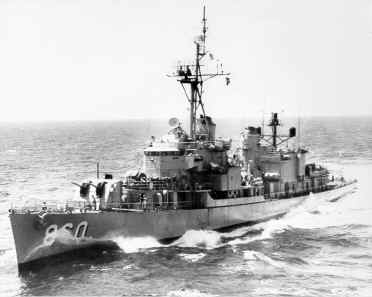
Much of Bethlehem Steel's production came from its enormous contribution to the World War II effort. As much as 70 percent of all airplane cylinder forgings, one-quarter of the armor plate for warships, and one-third of the big cannon forgings for the U.S armed forces were turned out by Bethlehem Steel, and the company was responsible for building nearly one-fifth of the U.S. Navy's two-ocean fleet.[1]. After the war, Bethlehem Steel continued working on the civilization it had begun before the war. It is responsible for the steel frames for many bridges throughout the U.S. such as the George Washington Bridge and the Golden Gate Bridge and buildings such as the Chrysler Building in New York City. In fact, 80% of the skyscrapers in NYC would collapse if Bethlehem's steel beams were removed. In it's glory days, it was the number two steel mill in the nation. In the race for number one on the Fortune 500 list, "The Corporation", as it was known as by the competition, was known as "Little Steel" and was second only to "Big Steel" - U.S. Steel (USX).

Alas, "as the nation goes, so steel goes" is how things work in the steel industry. Bethlehem Steel couldn't keep up with the invasion of foreign steel and mini mills and substitute materials such as aluminum and pressed concrete. These, however, have been threats to local steel for as long as local steel has been in business. Bethlehem Steel collapsed when other steel companies did not. Much of this is due in part because with the expansion of the free market, the increased availability of cheaper steel, and better methods of production, Bethlehem Steel did not grow and diversify as the competition did. During the recession of the 1970s and 1980s, the steel companies often made business ventures outside of their own industry, using new consolidations and purchases to fund their assets that were failing due to the economy. For example, U.S. Steel purchased the Marathon Oil company and used oil profits to bolster its sinking steel plants until the end of the recession. When its steel profits began to recover, the company then separated the two. Another aspect of Bethlehem's demise was its sloth in developing competitve but environmentally conscious production methods. The invasion of foreign materials made it very clear that steel consumers would prefer to use foreign components if the cost was lower and the quality just as good if not better than what was being produced locally. Many failing steel companies did not engage in this aspect of the competition, and in refusing to do so lost so much money that bankruptcy was inevitable, dispite a long, successful track record.

When the time for expansion was at hand, Bethlehem did not grow as the other steel mills did. It's top executives continued to pay themselves lavish salaries, dispite the toll and the distress the economy and lack of and business was putting on the company. Since the war years, the company had maintained the same people on the executive board. These men paid themselves and ran the business as if The Corporation was still reaping the profits of turning out warships, cannons, bridges, and buildings. Sadly, when fresh executives were brought in to clean up the company's fiscal mess, they attempted emergency repairs: freeze executive salaries and lay off workers. However, the fixes came too late, and the company inevitably failed because of itself. It didn't just fail itself, though. It put the entire Lehigh Valley out of a job. Entire families for generations had been employed by this company.

Given that information, the rest of the song's lyrical meanings are self explanatory.


"Allentown" - Billy Joel, 1982


~information rolled out from:
[1]http://www.bethlehempaonline.com/steelgolden.html
http://money.cnn.com/magazines/fortune/fortune_archive/2004/04/05/366339/index.htm
http://www.bethlehempaonline.com/steel.html
http://www.archaeology.org/9911/etc/mill.html